

Contamination OCD, not always what it appears
Historically, when people think of Obsessive-Compulsive Disorder, the stereotype that they envision is that of people washing their hands repeatedly or avoiding touching things. This is commonly known as contamination OCD. While many individuals who experience OCD do suffer from this type of contamination, there are also several additional presentations of contamination OCD.
Some additional presentations of this subtype include emotional, identity, and more “magical” presentations. The International Obsessive Compulsive Foundation, IOCDF, does a great job of listing some of these. They usually include intense fears of being contaminated by thoughts, people, names (of people, illnesses, disabilities), mental images, certain body types or people that are perceived to possess certain qualities or characteristics, colors, and many others.
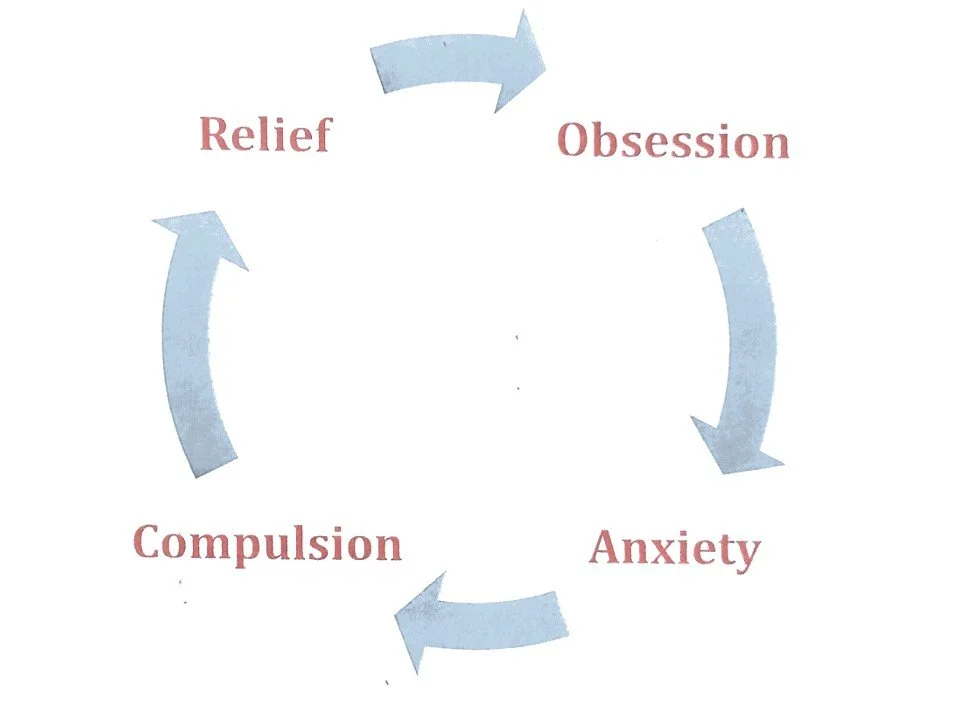
These intense fears are distressing and are accompanied by obsessions. Obsessions are defined as unwanted intrusive thoughts and they are the first step in the obsessive-compulsive cycle. When an individual with OCD experiences these obsessions, it is distressing and they want it to go away. This leads them to the next step in the cycle, compulsions. Compulsions are physical or mental behaviors and rituals that individuals utilize in an attempt to reduce the distress and anxiety from the obsessions artificially. Below is a physical depiction of this cycle.
Exposure and Response Prevention, ERP is the front-line treatment for OCD, additionally, Acceptance and Commitment Therapy (ACT) and cognitive behavioral (CBT) approaches have been shown as evidenced based approaches to treating obsessive compulsive disorder.
Contamination OCD can present in many different ways, and it usually shows up differently from individual to individual. For some individuals their compulsions tend to be based in more physical manifestation, while others experience more mental compulsions. Sometimes mental compulsions accompany physical compulsions. In my clinical experience these lesser-known presentations of contamination OCD tend to experience more mental compulsions.
While OCD is a chronic condition, meaning, there is no official cure. There is relief from symptoms and treatment can allow individuals to live a life on their terms and values, rather than on the rules and demands of OCD. If you or a loved one are experiencing OCD symptoms, there is support.