

Resources, Insights, and Education for OCD, Anxiety and related disorders
Explore educational resources designed to help individuals and families better understand OCD, anxiety, and related disorders.

Will Humans be extinct in 5 years? Existential OCD & the Overlap with Artificial Intelligence
Existential OCD is a subtype of obsessive-compulsive disorder (OCD). Like many other subtypes of OCD, existential OCD is commonly misunderstood and commonly confused. In clinical settings, we commonly see individuals experiencing existential OCD

We’ve got an Acronym for that. An overview of BFRB’s
BFRB’s, formally known as Body-focused repetitive behaviors, are a range of behaviors that fall under the category of obsessive-compulsive related disorders in the fifth edition of the Diagnostic and Statistical Manual of Mental Disorders (DSM-V), which clinicians use to assist in the diagnosis of mental disorders. Furthermore, they fall under a specific section of the DSM-V, the self-grooming category in the DSM V. They include trichotillomania (hair pulling), excoriation disorder (skin picking), and related behaviors.
In practice, BFRB’s are not usually experienced in isolation but occur alongside other symptoms and presentations. It is fairly common for BFRB’s to accompany several other conditions that we commonly treat. These can include, but are not limited to, obsessive-compulsive disorder, generalized anxiety disorder, social anxiety disorder, eating disorders, panic disorder, and hoarding disorder to name a few.

Pedophilic OCD (pOCD) - An Overview
Pedophilia OCD (pOCD) is a subtype of OCD commonly seen in clinical settings by clinicians with experience treating OCD. However, it can often be misunderstood and mishandled in broader clinical settings or society at large. Pedophilic OCD is usually accompanied by a significant amount of secrecy, shame, and embarrassment. pOCD is defined as an intense and excessive fear of being a pedophile, being attracted to kids, being viewed as a pedophile, having thoughts similar to those that a pedophile might have, or doing something that could be construed as harming kids. These thoughts are unwanted, intrusive, and very distressing.

Scrupulosity - Really a Matter of Faith?
According to the International OCD Foundation, Scrupulosity is “a subtype of obsessive-compulsive disorder (OCD) involving religious or moral obsessions. Scrupulous individuals are overly concerned that something they thought or did might be a sin or other violation of religious or moral doctrine. They may worry about what their thoughts or behavior mean about who they are as a person.”

Relationship OCD (ROCD) or OCD in relationships?
If you are reading this, chances are, you fit into one, or multiple of the following buckets. An individual experiencing OCD, a loved one supporting someone experiencing OCD or a clinician or researcher, interested in the topic. How Obsessive-compulsive disorder (OCD) can have an impact on relationships is well documented and established. OCD can interfere with all types of relationships. Including, but not limited to friendships, colleagues and co-workers, family, classmates and peers. Often, OCD shows up in multiple relationships.
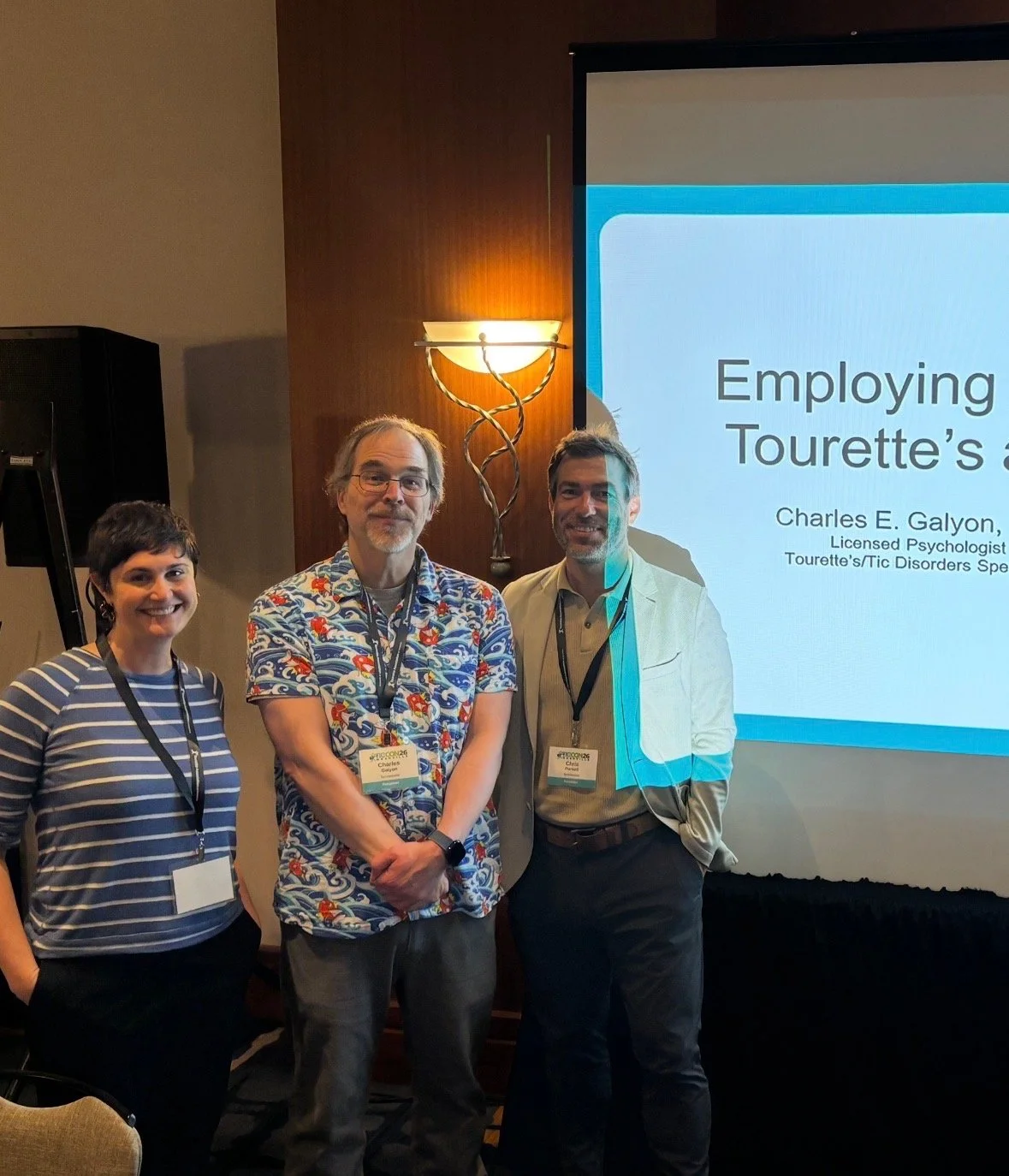
A Review of the Tourette Association of America’s Annual Conference, TIC-CON 26
I recently had the privilege of attending and presenting at the Tourette Association of America’s annual conference, otherwise known as TIC-CON in Nashville, TN. The conference was very informative and a great opportunity to connect with other clinicians, researchers and individuals and families with lived experience.

Harm OCD, a common taboo subtype
Harm OCD is one of the many subtypes of OCD that is considered taboo. Taboo subtypes tend to be painful to discuss and often go without disclosure and treatment.

Contamination OCD, not always what it appears
Historically, when people think of Obsessive-Compulsive Disorder, the stereotype that they envision is that of people washing their hands repeatedly or avoiding touching things. This is commonly known as contamination OCD.